Rwanda Day 2011, Chicago

Elbert L. Fausett Distinguished Professor Emeritus of Chemistry
- Robert A. Welch Foundation Postdoctoral Fellow, Rice University
- Ph.D., University of Arkansas
- B.S., Ouachita Baptist University
Prospecting for Pheremones Via Green Solventless Extraction Techniques
.jpg "elephant breeding") African Elephant (Loxodonta africana)
African Elephant (Loxodonta africana)
Collaboration with Dr. Bruce Schulte, Western Kentucky University
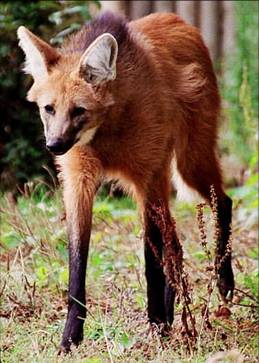 Maned Wolf (Chrysocyon brachyurus)
Collaboration with Dr. Nucharin Songasen, Smithsonian's Conservation Research Center, and Little Rock Zoo
 Binturong (Arctictis binturong)
Collaboration with Dr. Christine Drea, Duke University
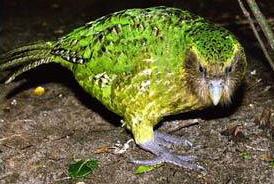 Kakapo (Strigops habroptilus)
Collaboration with Dr. Dianne Brunton and Anna Gsell, Massey University, Auckland, NZ, & Dr. Dave Greenwood, University of Auckland
 Bornean Orang-utan (Pongo pygmaeus)
Collaboration with Dr. Graham L. Banes, Max Planck Institute for Evolutionary Anthropology, Leipzig, Germany; CAS-MPG Partner Institute for Computational Biology, Shanghai, PRC; School of Veterinary
Medicine, University of Wisconsin-Madison; Henry Vilas Zoo, Madison, WI 53715
"Our understanding of mammalian pheromones is limited, owing to the complexity of mammalian life and the mammalian brain. Mammals integrate information received by their various senses, and this enormously complicates efforts to understand any specific
signal. In addition, interpreting the reaction to a signal can be difficult. The reactions of mammals are not automatic, and their behavior is not necessarily reproducible. Sometimes a pheromone produces no obvious response in a mammal. Perhaps the animal
has ignored the signal, or perhaps it has learned something for future use. In general, behavioral studies on mammalian pheromones are much more extensive than chemical research." ---William C. Agosta. 1994 Using Chemicals to Communicate. Journal of Chemical Education.
71: 242-246.
Research
Adventures with Undergraduates and Other Mammals
I am a synthetic
organic chemist who often masquerades as a chemical ecologist. The synthetic
organic chemistry brain cells are focused these days largely on three projects:
(1) the development of green chemistry experiments for the
introductory organic chemistry lab. We are particularly interested in
solventless reactions and reactions in or on water; (2) the enantioselective preparation of metabolites of the
anti-coagulation drug, warfarin (Coumadin) to be used as standards in LC-MS as
part of a study of human warfarin metabolism by Professor Grover Paul Miller in the Department of
Biochemistry and Molecular Biology at the University of Arkansas for Medical
Sciences; (3) using the Suzuki reaction of bromine-substituted isatins with
various boronic acids, followed by N-acetylation
and ring opening with methyl esters of amino acids or small peptides to provide
glyoxylamide peptidomimetics to be tested as potential antibacterials. This is in collaboration with Professors
David Black and Naresh Kumar of the School of Chemistry, University of New
South Wales (Australia).
The chemical
ecology brain cells are involved primarily with a study of chemical
communication, primarily among mammals.
These studies include the following animals (Biology collaborators): elephants (collaboration with Bruce
Schulte, Western Kentucky University); binturongs (several types) Christine Drea, Duke University; maned wolves (Nucharin Songsasen,
Center for Species Survival, Smithsonian Conservation Biology Institute); kakapo (Anna Gsell/Diane Brunton,
Massey University, Auckland, New Zealand); Dave Greenwood (Auckland University);
orang-utans; Graham L. Banes (Max Planck Institute for Evolutionary
Anthropology, Leipzig, Germany; CAS-MPG Partner Institute for
Computational Biology, Shanghai, PRC; School of Veterinary Medicine, University
of Wisconsin-Madison, WI; Henry Vilas Zoo, Madison, WI. Our chemical ecology analyses involve a solventless extraction technique
(solid phase dynamic extraction; SPDE) in conjunction with GC-MS.
Please see the list
of publications below, in which more information about our research can be
found. Regardless of the exact nature or goal of our research, a primary
objective is undergraduate education: teaching science by doing science. To
date, over 140 undergraduate collaborators have worked on our various research
projects full time in the summer and/or part time during the academic year.
Virtually all of these students have presented the results of their research
during at least one national scientific meeting and many have been co-authors
on peer-reviewed scientific papers.
Summer Research Group 2010
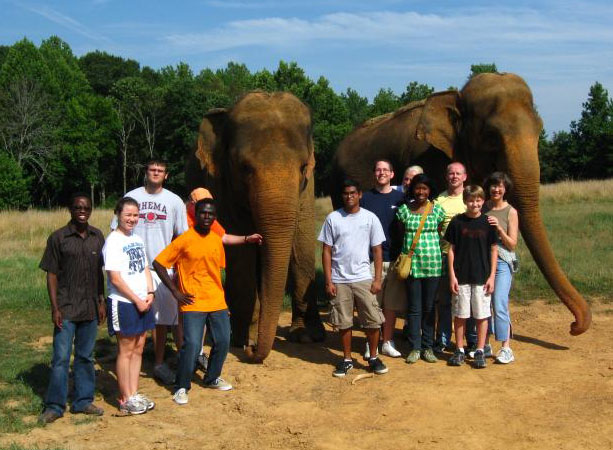
Summer Research Group 2011
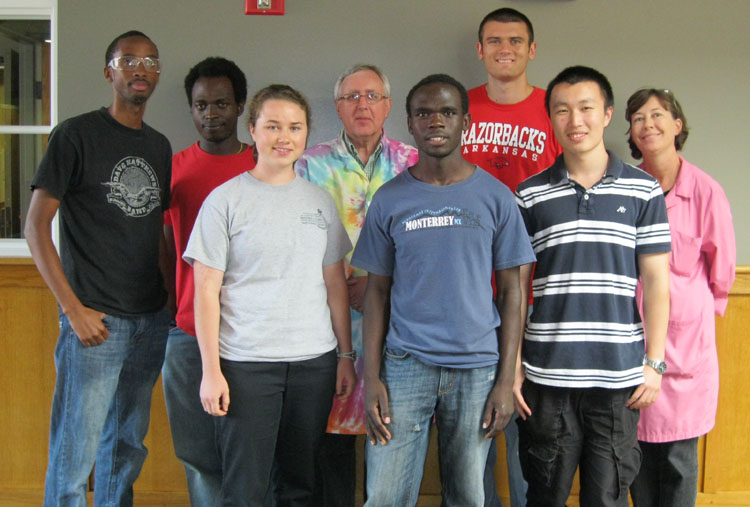
Summer Research Group 2012
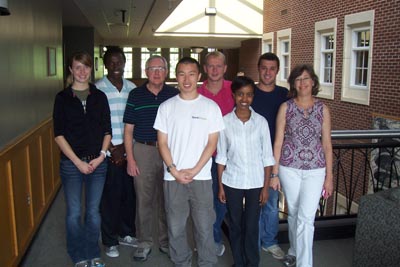
Summer Research Group 2014
International House of Chemistry (IHOC) 1.0
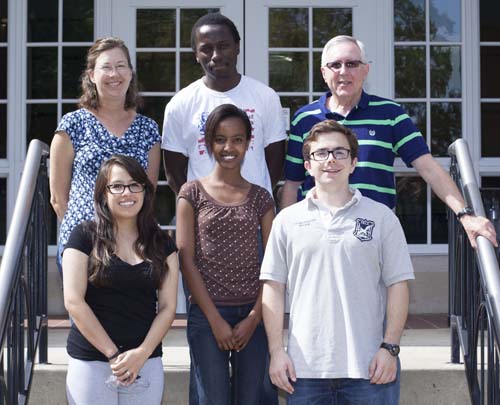
Summer Research Group 2015
International House of Chemistry (IHOC) 2.0
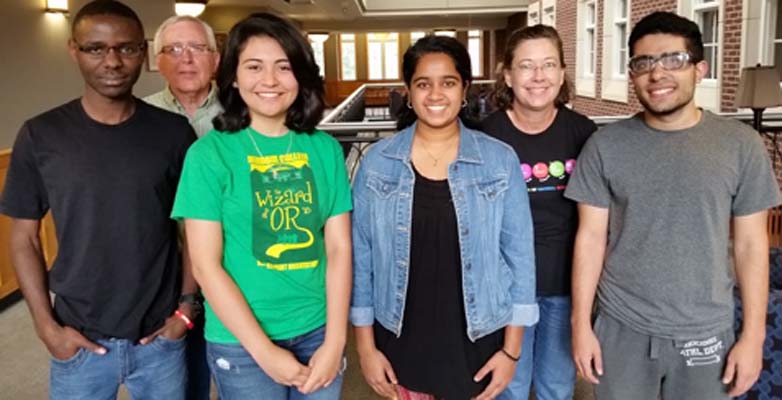
Student Abstracts from ACS Spring 2015 National Meeting
Enantioselective
synthesis and characterization of phase 1 warfarin metabolites
Robert Nshimiyimana1
*, Linda P. Desrochers1, Grover P. Miller2, and
Thomas E. Goodwin1
1Department of Chemistry, Hendrix College, Conway, Arkansas 72032; 2Department
of Biochemistry & Molecular Biology, University of Arkansas for Medical
Sciences, Little Rock, Arkansas 72205
Coumadin (warfarin)
is an anticoagulation drug for
the treatment and/or prevention of thromboembolic events. Maintaining an
optimal drug dose is challenging due to high inter-individual variability in
patient response and a narrow therapeutic range. We use warfarin metabolite
profiles from patients to improve understanding of the link between metabolism
and treatment response. Phase 1 metabolism produces a variety of
hydroxywarfarins which are converted to their glucuronide derivatives in Phase
2. We have prepared 6-, 7-, and 4’-hydroxywarfarins with ee >99% via an
enantioselective, catalytic coupling. Borohydride reduction of the S-warfarin carbonyl produces two
diastereomers, as does that of R-warfarin. These “warfarin alcohols” are also produced in vivo. We have separated the four
enantiomers via TLC. Taken together, these efforts provide a simple and
effective route to generate critical enantiomeric standards for identifying
biomarkers to help predict patient Coumadin dose-responses.
Green synthesis
of spiropyrrolizidines from isatin, proline, and E-4-phenylbut-3-en-2-ones
Justin
C. Murdock, Linda P. Desrochers, and Thomas E. Goodwin
Department of Chemistry, Hendrix College,
Conway, AR 72032
We are developing an experiment for the organic chemistry
laboratory by adapting a literature procedure (K. Revathy and A. Lalitha, RSC Adv. 2014, 4, 279-285) that
involves the concerted, suprafacial, [4S + 2S] cycloaddition of an azomethine
ylide with a chalcone. We replace the
chalcone with an E-4-phenylbut-3-en-2-one
to simplify the NMR spectra. An
azomethine ylide is generated in situ via the decarboxylation of an iminium ion
formed from the reaction of proline and isatin.
The product of this three-component condensation is a spiropyrrolizidine. We are exploring options for speeding up the
reaction while still using green chemistry, for example using microwave energy. Spiropyrrolizidines have been found to have
anti-cancer and anti-bacterial properties.
Synthesis
of aspartame N-acetylglyoxylamides: A
sweet reaction
Stephanie V.
Hernandez1, Aline Umuhire-Juru1, Linda P. Desrochers1,
Naresh Kumar2, David StC. Black2, and Thomas E. Goodwin1.
1Department of Chemistry, Hendrix College,
Conway, Arkansas 72032; 2School of Chemistry, University of New
South Wales, Sydney, Australia
Cheah et al. have reported
the synthesis of antibacterial peptidomimetics via ring opening of N-acetylisatins with amino acid methyl
esters (or methyl esters of di- and tri-peptides) to produce glyoxylamides (Tetrahedron Lett. 2008, 49, 2965-2968; Tetrahedron 2011, 67,
7603-7610). N-Acylisatins are more reactive in this manner than are the
corresponding isatins themselves as the C2 carbonyl moiety of the former
behaves as an imide carbonyl as opposed to the conventional amide carbonyl of
the latter. We are reacting a variety of N-acetylisatins with
aspartame to prepare a new set of glyoxylamide peptidomimetics for
antibacterial assays.
Synthesis of 5- and 6-(4-methoxyphenyl)-N-acetylglyoxylamides
Aline
Umuhire-Juru1, Stephanie Hernandez1,
Linda P. Desrochers1, Naresh Kumar2, David StC.
Black2, and Thomas E. Goodwin1
1Department of Chemistry, Hendrix College, Conway, Arkansas 72032; 2School
of Chemistry, University of New South Wales, Sydney, Australia
Cheah et al. have reported
the synthesis of antibacterial peptidomimetics via ring opening of N-acetylisatins with amino acid methyl
esters (or methyl esters of di- and tri-peptides) to produce glyoxylamides (Tetrahedron Lett. 2008, 49, 2965-2968; Tetrahedron 2011, 67,
7603-7610). N-Acylisatins are more reactive in this manner than are the
corresponding isatins themselves as the C2 carbonyl moiety of the former
behaves as an imide carbonyl as opposed to the conventional amide carbonyl of
the latter. We are using Suzuki-derived 5- and 6-(4-methoxyphenyl)-N-acetylisatins
and a variety of amino acid methyl esters to prepare new mono-glyoxylamide
peptidomimetics.
Synthesis of 5- and 6-(4-fluorophenyl)-N-acetylglyoxylamides
Nickie
Ngo1, Aline Umuhire-Juru1, Stephanie
Hernandez1, Linda P. Desrochers1, Naresh Kumar2,
David StC. Blac23, and Thomas E. Goodwin1
1Department of Chemistry, Hendrix College, Conway, Arkansas 72032; 2School
of Chemistry, University of New South Wales, Sydney, Australia
Cheah et al. have reported
the synthesis of antibacterial peptidomimetics via ring opening of N-acetylisatins with amino acid methyl
esters (or methyl esters of di- and tri-peptides) to produce glyoxylamides (Tetrahedron Lett. 2008, 49, 2965-2968; Tetrahedron 2011, 67,
7603-7610). N-Acylisatins are more reactive in this manner than are the
corresponding isatins themselves as the C2 carbonyl moiety of the former
behaves as an imide carbonyl as opposed to the conventional amide carbonyl of
the latter. We are using Suzuki-derived 5- and 6-(4-fluorophenyl)-N-acetylisatins
and a variety of amino acid methyl esters to prepare new mono-glyoxylamide
peptidomimetics for antibacterial assays.
Synthesis of 5- and 6-(4-trifluoromethylphenyl)-N-acetylglyoxylamides
Farai
Musariri1, Aline Umuhire-Juru1,
Stephanie Hernandez1, Linda P. Desrochers1,
Naresh Kumar2, David StC. Black2, and Thomas E. Goodwin1
1Department of Chemistry, Hendrix College, Conway, Arkansas 72032; 2School
of Chemistry, University of New South Wales, Sydney, Australia
Cheah et al. have reported
the synthesis of antibacterial peptidomimetics via ring opening of N-acetylisatins with amino acid methyl
esters (or methyl esters of di- and tri-peptides) to produce glyoxylamides (Tetrahedron Lett. 2008, 49, 2965-2968; Tetrahedron 2011, 67,
7603-7610). N-Acylisatins are more reactive in this manner than are the
corresponding isatins themselves as the C2 carbonyl moiety of the former
behaves as an imide carbonyl as opposed to the conventional amide carbonyl of
the latter. We are using Suzuki-derived 5- and 6-(4-trifluoromethylphenyl)-N-acetylisatins
and a variety of amino acid methyl esters to prepare new mono-glyoxylamide
peptidomimetics for antibacterial assays.
Honors, Professional Societies, and Responsibilities
- Selected as the
recipient of the 2016 American Chemical
Society Award for Research at an Undergraduate Institution (Award was
presented at the Spring National Meeting of the American Chemical Society in
San Diego in March, 2016.)
- Co-Editor of the
latest volume (13) of Chemical Signals in
Vertebrates, B. A. Schulte, M. H. Ferkin and T. E. Goodwin, Eds., Springer
Press, NY , 2016.
- Keynote speaker at STEM at the Capitol, February 2015 (this was a statewide undergraduate science poster session in the rotunda of the State Capitol in Little Rock).
- Co-Organizer (with Bruce Schulte) of the Chemical Signals in Vertebrates Conference at
the University of Illinois, July 2014 (meeting jointly with the International
Society for Chemical Ecology); Organizer of a symposium entitled “The Role of
Bacteria in Vertebrate Chemical Signaling: The Scents of Symbiosis”
- Organized and spoke at symposium entitled “Searching for Chemical
Signals in Vertebrates: Extractions from Biological Media as a Prelude
to GC-MS Analysis”; Chemical Signals in Vertebrates conference, Berlin,
Germany, August, 2011.
- Attended CUR workshop “Gateways to Best Practices for Undergraduate Program Directors, June, 2011, Washington University.
- Council on Undergraduate Research CUR Fellow Award, 2010 for undergraduate research leadership
- 2008 Invited Speaker, Stanford University, William S. Johnson Symposium in Organic Chemistry
- 2007 Recipient Pfizer-St. Louis Green Chemistry Research and Education Grant
- One of six keynote speakers at Research Corporation workshop for chemistry and physics faculty, and administrators in Tucson. “Models of Academic Leadership”; August, 2004.
- 2003 U.S. Professor of the Year (for baccalaureate colleges), awarded by the Carnegie Foundation for the Advancement of Teaching, and the Council for Advancement and Support of Education (CASE)
- Recipient of the Faculty Appreciation Award by the Hendrix College Class of 2002 and the Class of 2003 for "excellence in instruction and concern for students’ welfare"
- Visiting Fellow, Research School of Chemistry, Australian National University, Canberra (with Professor Martin Banwell), June, 2000
- Awarded 1998 David W. Mellor Medal for Chemical Education by the University of New South Wales, Sydney, Australia, and delivered the Mellor Address
- 1993 Chair, Gordon Research Conference on Heterocyclic Compounds
- American Chemical Society
- Phi Beta Kappa
- Council on Undergraduate Research (CUR) (President, 1992-93)
- Founding Co-Editor, CUR Quarterly, 1993-1996
- Recipient, Camille and Henry Dreyfus Foundation Scholar/Fellow Program for Undergraduate Institutions (1989)
- Signal Officers Basic Training, U.S. Army, Fort Gordon, Georgia, 3 months, fall 1973 (4 years of Army ROTC, Ouachita Baptist University, 1965-1969; Honorable Discharge from U.S. Army Reserves as a Captain, 1977).
Publications
- Lydia Greene, Timothy
Wallen, Anneke Moresco, Thomas Goodwin, Christina Drea 2016 Reproductive
endocrine patterns and volatile urinary compounds of Arctictis binturong: discovering why bearcats smell like popcorn. The Science of Nature 103: 37 [DOI
10.1007/s00114-016-1361-4]
- Thomas E. Goodwin, Innocent
H. Harelimana, Laura J. MacDonald, Daniel B. Mark, Aline
Umuhire Juru, Qin Yin, James A. Engman, Randall A. Kopper, Cheryl F.
Lichti, Samuel G. Mackintosh, James D. Shoemaker, Mark V. Sutherland, Alan J.
Tackett, Bruce A. Schulte 2016 The Role of Bacteria in Chemical Signals
of Elephant Musth: Proximate Causes and Biochemical Pathways. Chapter 6 in Chemical
Signals in Vertebrates 13, B. A.
Schulte, M. H. Ferkin and T. E. Goodwin, Eds., Springer Press, NY.
- L. E. L. Rasmussen, David R.
Greenwood, Thomas E. Goodwin, and Bruce A. Schulte 2016 Asian Elephant Reflections:
Chirality Counts. Chapter 17 in Chemical
Signals in Vertebrates 13, B. A. Schulte, M. H. Ferkin and T. E. Goodwin,
Eds., Springer Press, NY.
- Andres A. Caro, Ava
Commissariat, Caroline Dunn, Hyunjoo Kim, Salvador Lorente García, Allen Smith,
Harrison Strang, Jake Stuppy, Linda P. Desrochers, Thomas E. Goodwin 2015
Prooxidant and antioxidant properties of salicylaldehyde isonicotinoyl hydrazone
iron chelators in HepG2 cells. Biochimica
et Biophysica Acta 1850: 2256–2264.
- Pugh, C. P., Pouncey, D.
L., Hartman, J. H., Nshimiyimana, R., Desrochers, L. P., Goodwin, T.
E., Boysen, G., & Miller, G. P. 2014. Multiple
UDP-glucuronosyltransferases in human liver microsomes glucuronidate both R-
and S-7-hydroxywarfarin into two metabolites. Arch. Biochem. Biophys.564: 244–253.
- Morelli, T. L., Hayes, R.
A., Nahrung, H. F., Goodwin, T. E., Harelimana, I. H., Macdonald, L.
J., & Wright, P. C. 2013. Relatedness communicated in lemur
scent. Naturwissenschaften 100:769-777.
- delBarco-Trillo, J., Harelimana,
I. H., Goodwin, T. E., & Drea, C. M. 2013. Chemical differences
between voided and bladder urine in the aye-aye (Daubentonia
madagascariensis): Implications for olfactory communication studies. Am. J. Primatol. 75:695-702.
- Drea, C. M., Boulet, M.,
DelBarco-Trillo, J., Greene, L. K., Sacha, C. R., Goodwin, T. E., & Dubay,
G. R. 2013. The ‘secret’ in secretions: Methodological considerations in
deciphering primate olfactory communication. Am. J. Primatol. 75:621-642.
- “Hemiterpenoids and Pyrazines in the Odoriferous Urine
of the Maned Wolf (Chrysocyon brachyurus,”
T. E. Goodwin, N. Songsasen, L. J. Broederdorf, B. A. Burkert, C. J. Chen,
S.R. Jackson, B. Keplinger, M. E. Rountree, Z. J. Waldrip, M. E. Weddell,
L. P. Desrochers, W. K. Baker Jr and J. P. F. G. Helsper, Chapter 13 in Chemical Signals in Vertebrates 13, 2013 M. I. East and M. Dehnhard, Eds.,
Springer Press, NY, pp 171-184.
- Goodwin, T.E., Broederdorf, L.J., Burkert, B.A., Hirwa,
H.H., Mark, D.B., Waldrip, Z.J., Kopper, R.A., Sutherland, M.V. , Freeman,
E.W., Hollister-Smith, J.A., and Schulte, B.A. 2012. Chemical signals of elephant musth: Temporal aspects of
microbially-mediated modifications. J.
Chem. Ecol. 38:81-87.
- Goodwin, T.E. 2012. The Art of Organic Synthesis: Green
Chemists Find a Better Way, in Chemistry
for Changing Times. J. W. Hill, T. W. McCreary, D. K. Kolb. 13th
edition. New York: Pearson, p. 254.
- delBarco-Trillo, J., Burkert, B. A., Goodwin, T.
E., & Drea, C. M. 2011. Night
and day: the comparative study of strepsirrhine primates reveals
socioecological and phylogenetic patterns in olfactory signals. J. Evol. Biol. 24:82-98.
- Merte, C.E., Goodwin, T.E.,
& Schulte, B.A. 2010. Male and
female developmental differences in chemosensory investigations by African
elephants (Loxodonta africana)
approaching waterholes. Behav. Ecol.
Sociobiol. 64:401-408.
- Broederdorf, L.J., Meyer, J.M., Freeman, E.W., Goodwin, T.E., &
Schulte, B.A. 2009. The elephants of
Addo: An undergraduate research adventure. J.
Eleph. Managers Assoc. 20:27-31.
- Meyer, J.M., Freeman, E.W.,
Goodwin, T.E., & Schulte, B.A. 2009.
Monitoring African elephant chemical communication and hormone activity in Addo
Elephant National Park, South Africa. J.
Eleph. Managers Assoc. 20:32-36.
- Goodwin, T.E. The
Garden of Green Organic Chemistry at Hendrix College. In Changing the Course
of Chemistry: Green Chemistry Education; Anastas, P.T., Levy, I.J., Parent,
K.E., Eds.; ACS Symposium Series 1011; American Chemical Society: Washington,
DC, 2009; pp 37-53.
- Goodwin, T.E. & Schulte, B.A. 2009. Prospecting for
mammalian chemical signals via solventless extraction techniques: an
elephantine task. ChemoSense, 11(2),
9-15.
- McKenzie, L.C.; Huffman,
L.M.; Hutchison, J.E.; Rogers, C.E.; Goodwin, T.E.; & Spessard, G.O.
2009. Greener Solutions for
the Organic Chemistry Teaching Lab: Exploring the Advantages of Alternative
Reaction Media. J. Chem. Educ., 86,
488-493.
- Loizi, H., Goodwin, T.E.,
Rasmussen, L.E.L., Whitehouse, A.M. & Schulte, B.A. 2009. Sexual dimorphism in the performance of chemosensory
investigatory behaviours by African elephants (Loxodonta africana). Behaviour,
146, 373-392.
- “Intrasexual chemical communication and social
responses of captive female African elephants, Loxodonta africana” Meyer,
J.M.; Goodwin, T.E.; Schulte, B.A. Animal
Behavior 2008, 76, 163-174.
- Castelda,
S.M., Goodwin, T.E. & Schulte, B.A. 2008.
Investigating chemical signals in African elephants for convergence with
insects and similarities with Asian elephants. Pp. 81-91, in: Proceedings of
the 2007 International Elephant Conservation & Research Symposium, Orlando,
FL.
- “Use of Automated Solid Phase Dynamic Extraction
(SPDE)/GC-MS and Novel Macros in the Search for African Elephant Pheromones,”
T. E. Goodwin, P. A. Brown, M. S. Eggert, M. G. Evola, S. J. House, R. G.
Morshedi, M. E. Weddell, C. J. Chen, S. R. Jackson, Y. Aubut, J. Eggert, B.
A. Schulte, L. E. L. Rasmussen, Chemical
Signals in Vertebrates 112007
J. Hurst, R. Beynon, T. Wyatt, & C. Roberts, Eds., Springer Press, NY, pp
25-35.
- “Honest
Signalling through Chemicals by Elephants with Applications for Care and
Conservation”, Schulte, B. A.; Freeman, E. W.; Goodwin, T. E.; Hollister-Smith,
J.; Rasmussen, L.E.L. Applied Animal
Behaviour Science2007, 102, 344-363.
- “Insect Pheromones and Precursors in Female
African Elephant Urine”, Goodwin, T. E.; Eggert, M. S.; House, S. J.;
Weddell, M. E.; Schulte, B. A.; Rasmussen, L. E. L., Journal of Chemical Ecology2006,
32, 1849-1853.
- “Palladium-catalysed Cross-coupling and Related
Reactions Involving Pyrroles” Banwell, M. G.; Goodwin, T. E.; Ng, S.;
Smith, J. A.; Wong, D. J. European
Journal of Organic Chemistry2006,
3043-3060.
- “Male African elephants (Loxodonta africana) can distinguish oestrous status via urinary
signals”, Bagley, K. R.; Goodwin, T. E.; Rasmussen, L. E. L.; Schulte, B. A. Animal Behaviour2006, 71, 1439-1445.
- “African Elephant
Chemical Communication and Humans in Tanzania”, Schulte, B. A.; Napora, E.;
Vyas, D. K.; Goodwin, T. E.; Rasmussen, L.E.L. J. Elephant Managers Association 2006, 17, 28.
- “African elephant births and
post-partum events in West Kilimanjaro, Tanzania”, Vyas, D. K.; Goodwin, T. E.;
Rasmussen, L.E.L.; Schulte, B. A. J.
Elephant Managers Association2006,
16, 30.
- “Elephant Death Possibly by
Constipation”, Vyas, D. K.; Goodwin, T. E.; Rasmussen, L.E.L.; Schulte, B. A. Pachyderm2005, 39, 93-96.
- “Chemical Analysis of Preovulatory
Female African Elephant Urine: A Search for Putative Pheromones”, Goodwin, T.
E.; Rasmussen, L. E.L.; Schulte, B. A.; Brown, P. A.; Davis, B. L.; Dill, W.
M.; Dowdy, N. C.; Hicks, A. R.; Morshedi, R. G.; Mwanza, D.; Loizi, H., Chemical Signals in Vertebrates 10 2005, R. T. Mason, M. P. LeMaster, and
D. Muller-Schwarze, eds., Springer, NY, pp 128-139.
- “Hormone Receptor Expression in
Interdigital Glands of the Asian Elephant (Elephas
maximus)”, Lamps, L. W.; Smoller, B. R.; Goodwin, T. E.; Rasmussen, L. E.
L., Zoo Biology2004, 23, 463-469.
- “An Asymptotic Approach to the
Development of a Green Organic Chemistry Laboratory”, Goodwin, T. E., J. Chem. Educ.2004, 81, 1187-1190.
- “Elephant Chemotactile Communication
and Conservation”, Schulte, B. A.; Loizi, H.; Bagley, K.; Gray, A.; Stanley,
L.; Correll, M.; Goodwin, T. E.; Brown, P. A.; Davis, B. L.; Dill, W. M.;
Dowdy, N. C.; Hicks, A. R.; Morshedi, R. G.; Mwanza, D.; Rasmussen, L. E.
L. J. Elephant Managers Assoc.2004, 15, 16-23.
- "African Elephant
Sesquiterpenes. II. Identification and Synthesis of New Derivatives of
2,3-Dihydrofarnesol", Goodwin, T. E.; Brown, F. D.; Counts, R. W.;
Dowdy, N. C.; Fraley, P. L.; Hughes, R. A.; Liu, D. Z.; Mashburn, C. D.;
Rankin, J. D.; Roberson, R. S.; Wooley, K. D.; Rasmussen, E. L.; Riddle, S.
W.; Riddle, H. S.; Schulz, S. J. Nat.
Prod.2002, 65, 1319-1322.
- “Initial Studies
on the Source and Cyclic Release Pattern of (Z)-7-Dodecenyl Acetate, the
Preovulatory Pheromone of Female Asian Elephants,” L. E. L. Rasmussen and T. E.
Goodwin, Chem. Senses 2000, 25, 603.
- "Characterization of
Interdigital Glands in the Asian Elephant (Elephas
maximus)", L. W. Lamps, B. R. Smoller, L.E.L. Rasmussen, B. E. Slade,
G. Fritsch, and T. E. Goodwin Research in
Veterinary Science 2001, 71, 197-200.
- “Unwinding
of Unnatural Substrates by a DNA Helicase”, A. J. Tackett, P. D. Morris, R.
Dennis, T. E. Goodwin, K. D. Raney, Biochemistry2001, 40, 543-548.
- “Enhanced
Pneumocystis carinii Activity of New
Primaquine Analogs”, T. E. Goodwin, C. J. Boylan, W. L. Current, J. C. Byrd,
C. B. Edwards, D. A. Fuller, J. L. Green, C. D. Larocca, K. D. Raney, A.
S. Ross, and W. A. Tucker, Bioorg.
Med. Chem. Letters2000, 10, 2205-2208.
- “The First Disclosure and Preliminary Investigation of
a Liquid Released from the Ears of African Elephants”, H. S. Riddle, S. W.
Riddle, L. E. L. Rasmussen, and T. E.
Goodwin, Zoo Biology2000, 19, 475-480.
- “Synthesis of 13C,2H3-Salmeterol:
An Analytical Internal Standard for Pharmacokinetic Studies,” T. E. Goodwin, X.
Zhou, P. A. Haile, P. Breen, P. J. Anderson, F. C. Hiller, and C. M.
Compadre Journal of Labelled Compounds
and Radiopharmaceuticals , 2000,
43, 65-75.
- “African Elephant Sesquiterpenes,” T. E. Goodwin, L.
E. L. Rasmussen, A. C. Guinn, S. S. McKelvey, R. Gunawardena, S. W.
Riddle, and H. S. Riddle Journal of
Natural Products, 1999, 62, 1570-1572.
- “A Multistep Synthesis of
4-Nitro-1-Ethynylbenzene Involving Palladium-Catalyzed Carbon-Carbon Bond
Formation, Conformational Analysis Using NMR Spectroscopy and Molecular
Modeling, Acetal Hydrolysis, and Oxidative Decarbonylation,” T. E. Goodwin, E.
M. Hurst, and A. S. RossJ.
Chem. Educ.1999, 76, 74-75.
- “Observations on the Stereochemistry of Reduction of 2,6-Dimethylcyclohexanones,”
T. E. Goodwin, J. M. Meacham, M. E. Smith Canadian J. Chem.1998, 76, 1308-1311.
- “A
Simple Procedure for Solid Phase Synthesis of Peptide Nucleic Acids with N-Terminal Cysteine,” T. E. Goodwin, R.
D. Holland, J. O. Lay, Jr., and K. D. Raney Bioorg.
Med. Chem. Lett.1998, 8, 2231-2234.
- “Synthesis of Conformationally Mobile Bicyclic
Tetrahydro-1,2-Oxazines by Isomerization of Isoxazolidinylmethyl Tosylates,” T.
E. Goodwin, D. M. Cousins, S. D. Debenham, J. L. Green, M. L. Guyer, E. G.
Jacobs, T. R. Hoye, D. O. Koltun, and J. R. Vyvyan J. Org. Chem. 1998, 63, 4485-4488.
- “Synthesis of Highly Phenylated Poly(p-phenylene vinylenes)
via a Chlorine Precursor Route,” B. R. Hsieh, W. C. Wan, Y. Yu, Y. Gao, T. E.
Goodwin, S. A. Gonzalez, and W. A. Feld Macromolecules1998, 31, 631-636.
- “Synthesis of Two New Maytansinoid Model Compounds from
Carbohydrate Precursors,” T. E. Goodwin, K. R. Cousins, H. M. Crane, P. O.
Eason, T. E. Freyaldenhoven, C. C. Harmon, B. K. King, C. D. Larocca, R. L.
Lile, S. G. Orlicek, R. W. Pelton, O. L. Shedd, J. S. Swanson, and J. W.
ThompsonJ. Carbohydr. Chem.1998, 17, 323-339.
- “Crystal Structure of (4,4aa,8aa)-(+)-Octahydro-2-(phenylmethyl)--2H-1,2-benzoxazin-4-ol,
4-Methylbenzenesulfonate (ester),” W. Cordes, J. L. Smith, M. C. Noble,
T. E. Goodwin, D. M. Cousins, and E. G. JacobsJ. Chem. Cryst.1998, 28, 133-137.
- “How to Get Started in Research,” a booklet published by the
Council on Undergraduate Research, 1995 (Co-authored and edited with B. Holmes,
UNC-Asheville) [2nd Edition, 1999].
- “Notes from a Fledgling Elephant Researcher,” T. E. Goodwin Journal of the Elephant Manager’s
Association1997, 8, 42.
- Synthesis
of Highly Phenylated Poly(p-phenylenevinylenes)
via Halogen Precursor Route (HPR),” S. A. Gonzalez, T. E. Goodwin, W. A.
Feld, and B. R. Hsieh Polymer Preprints1997, 38, April Issue.
- “Stereoselectivity Reversals in
Conjugate Additions to a 2,3-Dihydro-4H-pyran-4-one,” T. E. Goodwin, N. M.
Rothman, K. L. Salazar, S. L. Sorrels, and F. E. Evans J. Org. Chem.1992, 57,
2469-2471.
- “Preparation of an Aromatic
Synthon for Maytansinoid Synthesis,” T. E. Goodwin, S. G. Orlicek, N. R.
Adams, L. A. Covey-Morrison, J. S. Jenkins, and G. L. TempletonJ. Org. Chem.1985, 50, 5889-5892.
- “An Undergraduate Laboratory
Experiment: The Total Synthesis of Maytansine”, T. E. Goodwin J. Chem. Educ. 1984, 61, 511-512.
- “Stereoselective addition of organocopper reagents to a
novel carbohydrate-derived 2,3-dihydro-4H-pyran-4-one,” T. E. Goodwin, C. M.
Crowder, R. B. White, J. S. Swanson, F. E. Evans, and W. L. Meyer J. Org. Chem. 1983, 48, 376-380.
- “Synthesis of (E)-1-aryl-2-methyl-3-alkyl-2-propen-1-ones via sulfoxide sulfenate
ester rearrangements,” T. E. Goodwin, D. G.
Ratcliff, C. M. Crowder, and N. K. Seitzinger
J. Org. Chem.1982, 47, 815-820.